
I spent nearly every afternoon of my early teen years visiting the library that was walking distance from my house because I could think of no better way to spend the afternoon than reading, and the library was quieter than my house. My father, a prolific reader himself, had trouble believing that anyone could enjoy reading that much, and began to question where I was “really” spending my time. Our conversations began to go a little something like this:
“Dad, I’m going to the library, I’ll be back before dinner.”
“No you’re not. You’ve been “at the library” every day this week. I want you home.”
“Why? It’s the library. You’re honestly going to tell me you have a problem with me spending my free time reading?”
“I don’t think that’s where you go! NO ONE spends that much time at the library!”
“Where do you think I’m going? I’m not old enough to drive and there’s no other place to walk besides other houses.”
“Okay FINE, but when I find out what you’re really doing, we’ll see how smart you are then.”
One day I happened to glance up from my book as I lay with my head propped up on a low windowsill in my favorite, practically hidden corner of the YA section, and saw what looked suspiciously like my father skulking around and peeking down aisles with an increasingly triumphant look on his face. He finally made his way over near where I was.
“Hi Dad.”
He yelped in surprise.
“Oh, Kelley! You scared me! You…you really are here.”
“Yep.”
Those were the days before the drinking and fighting started. Before I needed to find a place that was open as late as possible. Before I wanted to hang out with friends who didn’t want to spend their afternoons at the library. My brother joined a car club that liked to spend their evenings leaning on their souped-up cars outside of a Starbucks that was conjoined with a Barnes and Noble. As my parents fighting persisted, so did my desire to be somewhere, or really, anywhere, but home. I begged my brother to take me and our younger sister with him.
“No, you guys will be annoying.”
“We won’t, I promise. We’ll stay in Barnes and Noble and do our homework and hang out until you’re ready to leave.”
He relented, and I kept my promise. If all the tables were taken, we’d forgo our homework and peruse the music section or pluck books from the shelves to read while sitting on the floor in a corner. At the library I stuck to the YA stacks, but at Barnes and Noble my time was spent walking through other sections and picking up anything that piqued my interest.
Barnes and Noble is not where I learned to love books. But it is where I discovered Rainer Maria Rilke and Pablo Neruda and learned to love poetry. It’s where I spotted the bright green cover of The Perks of Being a Wallflower and learned the healing power of a book that makes you feel like even if it’s not going to be okay, at least you’re not alone. It’s where I discovered Milan Kundera. It’s where I read On the Road, Naked Lunch and Howl while sitting in sunbeams on summer afternoons. It’s where I attempted to tackle Faulkner, Dostoevsky and Tolstoy and tried to be conspicuous when I skimmed chapter summaries in SparkNotes that I kept hidden in my lap under the real thing when plot points went over my head.
It’s where I picked up romance novels and whispered passages while giggling with girlfriends but secretly come back to them another day when I was alone. It’s where my best friend and I played each other the most random CD’s we could find to make each other laugh, including a Luciano Pavarotti CD and made up a ridiculously elaborate scenario to accompany the most dramatic song we’d ever heard.
I developed crushes on more than a few guys who worked there as booksellers. I swooned when one of them told me that what initially drew me to him was my taste in classic literature and that he finally decided to talk to me when he saw me attempting to stifle a laugh while reading A Confederacy of Dunces. I smiled and thought, this is like something out of a WB show. (The height of the romance bar in my teen years.)
I went to that Barnes and Noble on my first date. We stopped by the adjoining Starbucks and decided to walk around to look at books and find out if we liked any of the same ones. (We didn’t.) After I graduated from high school, my best friend and I spent every night doing the exact same thing: We stopped by Starbucks, did a lap or two around both levels of Barnes and Noble, and left to play pool or walk around somewhere.
Barnes and Noble became my true north. It’s where I have taken every close friend and boyfriend I’ve ever had. It’s where I went when I was unhappily living with my parents, and then when I was unhappy about my next living situation too. It’s where I’ve always gone when I wanted to be alone. Any time I’ve felt listless or upset or angry or sad, I’ve found myself there, drinking the same drink from Starbucks, perusing the same aisles, and pulling different books down to read. When the animosity between my parents reached its peak, I stayed until closing time, knowing that even at 11:30 at night I would arrive to a house full of screaming. I strongly considered stowing myself away behind a rack in the children’s section and secretly, happily, spending the night. I didn’t want to steal anything. I just never really wanted to leave.
I knew that I was finally in a happy place when my now husband and I moved into a small apartment, our first place where only the two of us lived. It took us more than a week to unpack and one evening I went to my bookshelf to find something to read, and it occurred to me that I hadn’t been to Barnes and Noble in more than three weeks. I was stunned.
I’ve always been a creature of habit, an admission that is probably both obvious and an understatement based on what I’ve written here. I have the patience of an oyster and rarely tire of anything that brings me happiness. Not people, not food, not things, and not places. My father has long told a story where he came home from work to find three year old me sitting on the couch, watching a movie. My mother made a hobby of recording movies and TV shows onto hundreds of VHS tapes and cataloguing them for our viewing pleasure. Upon closer inspection, he saw that I was watching 20,000 Leagues Under the Sea, which struck him as odd.
“Hey Kel, what are you watching?”
“The Brave Little Toaster.”
He checked the TV again. It was definitely 20,000 Leagues Under the Sea.
“This isn’t The Brave Little Toaster.”
“I know. It’s on after this.”
“Do you want me to fast forward it?”
“No thanks, I’ll wait.”
Life means change, an inevitability that I’ve accepted happily for the most part because I’ve spent as much time looking forward to moving on as I have wishing things would last. For a while, I couldn’t remember a time when I didn’t want to move from where I was living. I always couldn’t wait. The only time I felt at peace, at home, was when I was at my favorite book store.
It’s said that home is where the heart is, and I think that’s true. Part of my heart has always belonged to books — I “made my home between the pages of books,” as Maggie Stiefvater so eloquently put it — so it made sense that I would enjoy being surrounded by them. But this one particular Barnes and Noble was more than that to me. It was the home my heart chose when I needed a place to go. I feel such ridiculous gratitude for the very existence of this big ol’ chain book store, even if eventually my heart chose a new home.
Because if I ever get lonely, I can just go to the book store and visit my friends.
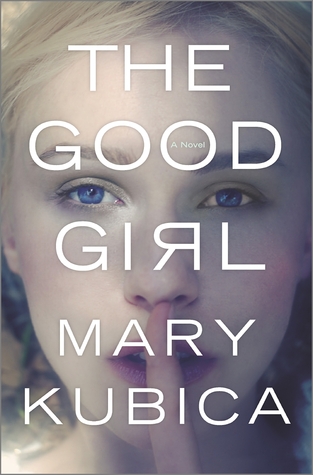
 touted it as “the next Gone Girl,” and my interest wasn’t really piqued. Probably because every book with a female protagonist and a mystery have been called that over the past couple years. And then I read a couple reviews that compared it to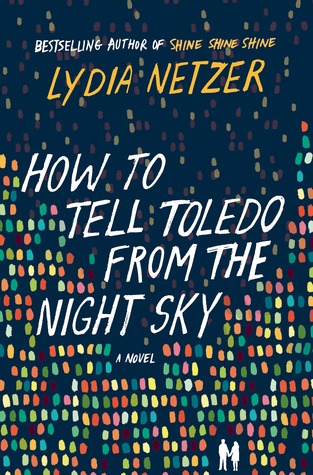

 Kelley Writes Stuff