I haven’t been shy about my adoration of This American Life. So it will come as absolutely no surprise that when I heard there would be a spin-off podcast featuring extended stories in the same vein of This American Life, and that it would be headed by TAL producer, Sarah Koenig, I was more than a little excited.
Serialis even better than I thought it would be, and who doesn’t just love when that happens? I find myself replaying each episode, discussing the events with my husband, pouring over old articles, web forums and Reddit pages where other listeners are discussing it, and asking everyone I come into contact with if they’ve listened to it yet. I am HOOKED.
Here’s a description of the current story:
On January 13, 1999, a girl named Hae Min Lee, a senior at Woodlawn High School in Baltimore County, Maryland, disappeared. A month later, her body turned up in a city park. She’d been strangled. Her 17-year-old ex-boyfriend, Adnan Syed, was arrested for the crime, and within a year, he was convicted and sentenced to spend the rest of his life in prison. The case against him was largely based on the story of one witness, Adnan’s friend Jay, who testified that he helped Adnan bury Hae’s body. But Adnan has always maintained he had nothing to do with Hae’s death. Some people believe he’s telling the truth. Many others don’t.
Sarah Koenig, who hosts Serial, first learned about this case more than a year ago. In the months since, she’s been sorting through box after box (after box) of legal documents and investigators’ notes, listening to trial testimony and police interrogations, and talking to everyone she can find who remembers what happened between Adnan Syed and Hae Min Lee fifteen years ago. What she realized is that the trial covered up a far more complicated story, which neither the jury nor the public got to hear. The high school scene, the shifting statements to police, the prejudices, the sketchy alibis, the scant forensic evidence – all of it leads back to the most basic questions: How can you know a person’s character? How can you tell what they’re capable of? In Season One of Serial, she looks for answers.
I just listened to an interview with Koenig where she speculated that there would probably be 12 episodes on the current story, which is still being investigated as I write this.
Episodes are released Thursday mornings, and episode five will air tomorrow.
I read a BookRiot article yesterday on having too many things to read and how it can feel problematic, and even stressful. “The problems isn’t that I haven’t had time to read or that I’ve let myself get wrapped up in other hobbies, work, distractions, etc. The issue is that I have so many quality choices and so much access to books that I’m paralyzed, unable to zero in on one (or even two or three) to pursue with everything I’ve got.”
I understand that so well.
I’ve written before about how I choose what to read next, and how sometimes it can be difficult to forcibly extract yourself from a story that you really connected to. BookTuber Christine did a pretty hilarious and spot on video of that very feeling:
And while a mourning period can stop your reading momentum in its tracks, having so many great options can also leave you a little frustrated and paralyzed with indecision.
Who knew the act of reading could be so complicated?
I have what I frequently refer to as a “lifelong TBR” collection when someone asks “why do you have so many books??” There are books that I have owned for years and will continue to own and will not read this year or next year or maybe not even the one after that. And that’s fine.
But lately I’ve been feeling a little stressed by library books. To borrow from Blow, my ambition far exceeds my talent. Again and again. And again.
I have 18 books checked out right now. And while I know it’s unlikely that I will read all of them, here is a compilation of the books I’m most excited to read.
If Elizabeth Bennet had the washing of her own petticoats, Sarah often thought, she’d most likely be a sight more careful with them.
When I read the description of this book, I had a hard time believing that I’d never heard of it before. I’m guilty of having read fan novels extending and retelling Pride and Prejudice. Longbournhas been described as P&P meets Downton Abbey, as it’s the story of P&P told from the servants perspective. It has mixed reviews, but I’m excited to see if I like it.
It seems you either love or hate Emily Gould. I’ve read her blog and internet writing, knew that she was an editor for Gawker, and that she’s from Silver Spring, Maryland, which is in my neck of the woods. I was curious about her, and even more so when I read her account of writing a novel. So when I saw this book at Barnes and Noble, I decided that I didn’t want to buy it but I did want to read it and it sat on my library holds list for the last six months.
Described by the publisher as “a novel about two friends learning the difference between getting older and growing up,” I figure if anything, Friendshipshould offer something to relate to.
Since I’m always a sucker for a love story, always a sucker for a story that takes place in Paris, and always a sucker for historical fiction about writers or artists whose work I admire, I Always Loved Youseems like it will be right up my alley.
The young Mary Cassatt never thought moving to Paris after the Civil War to be an artist was going to be easy, but when, after a decade of work, her submission to the Paris Salon is rejected, Mary’s fierce determination wavers. Her father is begging her to return to Philadelphia to find a husband before it is too late, her sister Lydia is falling mysteriously ill, and worse, Mary is beginning to doubt herself. Then one evening a friend introduces her to Edgar Degas and her life changes forever. Years later she will learn that he had begged for the introduction, but in that moment their meeting seems a miracle. So begins the defining period of her life and the most tempestuous of relationships.
I saw Colorless Tsukuru Tazaki and His Years of Pilgrimageon the new releases shelf, and did a double take, sure that it was mistakenly placed there, as it’s a fairly new and popular release, and surely must have holds stretching for months.
And then I more or less did the Grinch grin and added it to the stack I was holding.
Tsukuru Tazaki had four best friends at school. One day Tsukuru Tazaki’s friends announced that they didn’t want to see him, or talk to him, ever again. Since that day Tsukuru has been floating through life, unable to form intimate connections with anyone. But then he meets Sara, who tells him that the time has come to find out what happened all those years ago.
I loved Norwegian Wood and The Wind Up Bird Chronicles, and am slowly making my way through all of Murakami’s novels. I’m so excited to read this one.
My interest was piqued when I read reviews comparing The Queen of the Tearlingto The Hunger Games (strong female character, dystopian world) and Game of Thrones (medieval setting). But then I read reviews that say that’s not an apt comparison, and actually does the novel a disservice because those who read it because of that comparison wind up not liking it.
In the end, I was sold on this description: Combining thrilling adventure and action, dark magic, mystery and romance, The Queen of the Tearling is the debut of a born storyteller blessed with a startling imagination.
Short stories by Margaret Atwood? ‘Nuff said.
(But I’ll be nice and paste the description if you need a bit more.)
A recently widowed fantasy writer is guided through a stormy winter evening by the voice of her late husband in “Alphinland,” the first of three loosely linked stories about the romantic geometries of a group of writers and artists. In “The Freeze-Dried Bridegroom,” a man who bids on an auctioned storage space has a surprise. In “Lusus Naturae,” a woman born with a genetic abnormality is mistaken for a vampire. In “Torching the Dusties,” an elderly lady with Charles Bonnet syndrome comes to terms with the little people she keeps seeing, while a newly formed populist group gathers to burn down her retirement residence. And in “Stone Mattress,” a long-ago crime is avenged in the Arctic via a 1.9 billion-year-old stromatolite. In Stone Mattress: Nine Tales, Margaret Atwood is at the top of her darkly humorous and seriously playful game.
In the late nineteenth century, people were obsessed by one of the last unmapped areas of the globe: the North Pole. No one knew what existed beyond the fortress of ice rimming the northern oceans, although theories abounded. National glory would fall to whoever could plant his flag upon its shores.
James Gordon Bennett, the eccentric and stupendously wealthy owner of The New York Herald, funded an official U.S. naval expedition to reach the Pole, choosing as its captain George Washington De Long, who had gained fame for a rescue operation off the coast of Greenland. De Long led a team of 32 men deep into uncharted Arctic waters, carrying the aspirations of a young country burning to become a world power. On July 8, 1879, the USS Jeannette set sail from San Francisco to cheering crowds in the grip of “Arctic Fever.”
The ship sailed into uncharted seas, but soon was trapped in pack ice. Two years into the harrowing voyage, the hull was breached. Amid the rush of water and the shrieks of breaking wooden boards, the crew abandoned the ship. Less than an hour later, the Jeannette sank to the bottom,and the men found themselves marooned a thousand miles north of Siberia with only the barest supplies. Thus began their long march across the endless ice—a frozen hell in the most lonesome corner of the world. Facing everything from snow blindness and polar bears to ferocious storms and frosty labyrinths, the expedition battled madness and starvation as they desperately strove for survival.
Description from the publisher: From the highly acclaimed, multiple award-winning Anthony Doerr, the beautiful, stunningly ambitious instant New York Times bestseller about a blind French girl and a German boy whose paths collide in occupied France as both try to survive the devastation of World War II.
Marie-Laure lives with her father in Paris near the Museum of Natural History, where he works as the master of its thousands of locks. When she is six, Marie-Laure goes blind and her father builds a perfect miniature of their neighborhood so she can memorize it by touch and navigate her way home. When she is twelve, the Nazis occupy Paris and father and daughter flee to the walled citadel of Saint-Malo, where Marie-Laure’s reclusive great-uncle lives in a tall house by the sea. With them they carry what might be the museum’s most valuable and dangerous jewel.
In a mining town in Germany, the orphan Werner grows up with his younger sister, enchanted by a crude radio they find. Werner becomes an expert at building and fixing these crucial new instruments, a talent that wins him a place at a brutal academy for Hitler Youth, then a special assignment to track the resistance. More and more aware of the human cost of his intelligence, Werner travels through the heart of the war and, finally, into Saint-Malo, where his story and Marie-Laure’s converge.
I cannot adequately describe how lovely and poignant this book is, so I will simply say that you should absolutely read it and be prepared to be moved to your very bones. Despite how sad it became at times, I wanted it to last and last, but couldn’t put it down, so as I neared the end, I found myself rereading passages to prolong my time with the interweaving stories. All the Light We Cannot Seewill undoubtedly be the most beautiful book I read this year.
In 1959, nine students ventured into the Ural mountains for a ski hiking trip, and never returned. While much speculation has swirled for more than half a century, no one knows for certain what caused them to abandon their camp to die in the cold.
While many have argued that there are perfectly reasonable explanations for what happened to the hikers, conspiracy theories abound regarding the states of the bodies when found, the radiation traces on their clothing, the likelihood (or lack thereof) of paranormal and/or extraterrestrial activity, and the reaction of the Russian government to the investigation.
The incident has inspired films, books, documentaries, and overall creepiness. Which makes this podcast an ideal listening experience for my aforementioned desire to scare myself this month.
I love October, but not because of pumpkin spice everything or the changing weather or the dozens of tiny pumpkins I bring home to decorate and bewilder my husband with (win-win!) I love October because I LOVE Halloween. As a life-long devotee of horror movies, creepy books, and the macabre in general, I try to dedicate my free time in October to scaring the crap out of myself. (Admittedly, not hard to do.) I’ve been planning for a while and am happy to finally bask in my to-do for October 2014:
To Read:
Doctor Sleepby Stephen King. It’s the sequel to The Shining, which I read more than a decade ago and remains the scariest book I have ever read.
But I have heard thatHouse of Leavesby Mark Danielewski might be the one to knock The Shining down a peg. My sister cannot talk about this book without noticeably shivering. I’m excited and terrified to read it.
We Have Always Lived in the Castleby Shirley Jackson. I heard of this book years ago, but didn’t realize it was by the same author of The Haunting of Hill House, which left a serious mark on my psyche and ability to sleep at night if I’m dumb enough to think of it before going to bed.
Every year I love to re-watch Bravo’s 100 Scariest Movie Moments and 13 Scarier Movie Moments. It’s a seriously great, definitive list with interesting discussion from writers, directors and actors who have passionately contributed to the genre, and is just wonderful to experience all over again each year. Unfortunately Bravo has stopped showing it, but fortunately both series are available in their entirety on YouTube.
I was disappointed by the last season of American Horror Story, but have high hopes for AHS: Freak Show, which premiers October 8.
Netflix is a veritable host of terrible horror movies, which can be so fun to watch. I’m hoping to get my Awesomely Bad Movie Club together for a viewing (and wish, not for the first time, that they would bring Basket Case back to the instant watch list.)
Every year I like to watch an old favorite, especially if it’s one my husband hasn’t seen. He recently revealed that he’s never watched Rosemary’s Baby, so introducing him to that mindfuck of a film has become a top priority.
And finally, I like to check out at least one or two new (to me) movies that horror fans rave about. This year my picks are The Changeling and Lake Mungo.
I love to visit haunted places and go on haunted hayrides and take haunted house tours. This year I’m planning a day-trip to King’s Dominion for their Halloween Haunt with some friends. I went a few years ago and this doll factory scared the crap out of me: http://www.youtube.com/watch?v=39zpAyN1zJc
And with that, I should be sufficiently scared silly by Halloween.


 has been described as P&P meets Downton Abbey, as it’s the story of P&P told from the servants perspective. It has mixed reviews, but I’m excited to see if I like it.
 should offer something to relate to.
 seems like it will be right up my alley.
 on the new releases shelf, and did a double take, sure that it was mistakenly placed there, as it’s a fairly new and popular release, and surely must have holds stretching for months.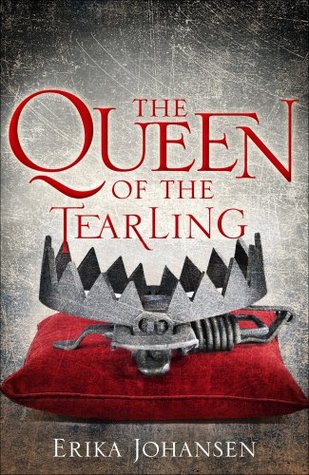
 to The Hunger Games (strong female character, dystopian world) and Game of Thrones (medieval setting). But then I read reviews that say that’s not an apt comparison, and actually does the novel a disservice because those who read it because of that comparison wind up not liking it.
 , Margaret Atwood is at the top of her darkly humorous and seriously playful game.

 on
on 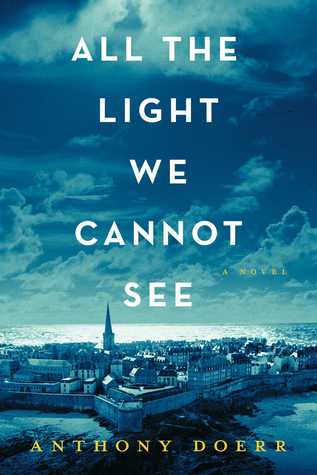
 will undoubtedly be the most beautiful book I read this year.
 by Stephen King. It’s the sequel to
  , which I read more than a decade ago and remains the scariest book I have ever read.
 by Mark Danielewski might be the one to knock The Shining down a peg. My sister cannot talk about this book without noticeably shivering. I’m excited and terrified to read it.
 by Shirley Jackson. I heard of this book years ago, but didn’t realize it was by the same author of The Haunting of Hill House, which left a serious mark on my psyche and ability to sleep at night if I’m dumb enough to think of it before going to bed.
 Kelley Writes Stuff